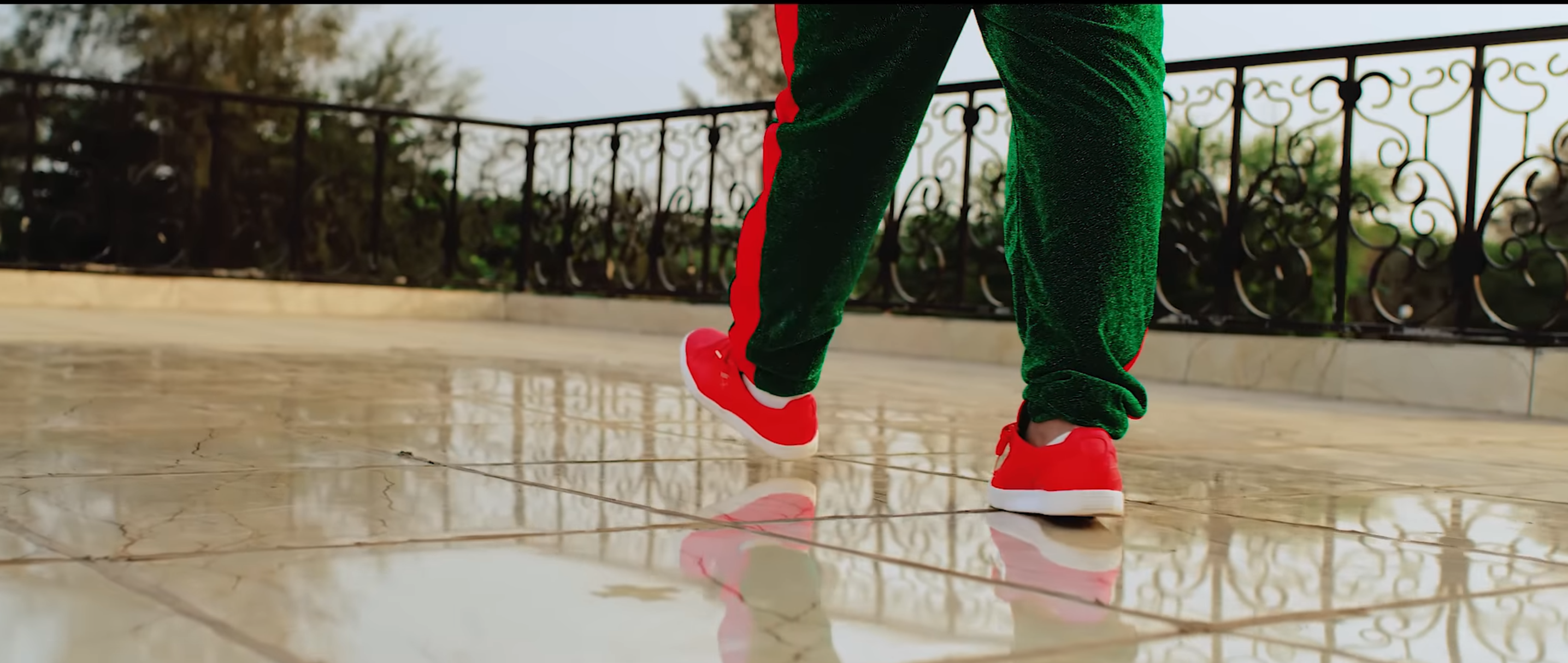
The evolution of music video production is here, and artificial intelligence is rewriting the boundaries of visual storytelling.
For decades, music video production has been a powerful intersection of music, imagination, technology, and filmmaking. From the elaborate sets of the 1980s to the cinematic masterpieces of modern Afrobeats, music videos have continuously evolved alongside the technologies used to create them.
Today, however, the industry is experiencing one of its most significant transformations.
Artificial intelligence is changing not just how music videos are produced, but what filmmakers can imagine and bring to life.
We are entering an era where a music video no longer has to be entirely dependent on physical locations, elaborate set construction, large production crews, or conventional shooting methods.
Through AI video generation, computer-generated imagery (CGI), and hybrid filmmaking, creators can now explore visual environments and cinematic concepts that would previously have demanded substantial production resources.
At Frizzle & Bizzle Films, we see this evolution as an expansion of filmmaking possibilities—one where traditional cinematography and emerging technologies can work together to create extraordinary visual experiences.
From Traditional Music Videos to AI-Powered Productions
Traditional music video production has typically followed an established process: concept development, location scouting, casting, set design, filming, editing, colour grading, and post-production.
Each stage requires creative expertise, financial investment, and logistical coordination.
An artist envisioning a music video inside a magnificent palace, a futuristic metropolis, or a surreal fantasy environment would traditionally require access to those locations, expensive constructed sets, or extensive visual effects work.
Today, AI-assisted filmmaking offers another approach.
Filmmakers can generate digital environments, conceptualise complex scenes, create virtual characters, and explore different cinematic settings without necessarily building every element physically.
An artist could perform inside a studio while the final music video presents a completely different world through carefully executed digital compositing and visual effects.
The creative ambition remains. What changes is the range of tools available to achieve it.
What Is AI Music Video Production?
AI music video production is the use of artificial intelligence technologies to assist in developing, generating, editing, or enhancing the visual elements of a music video.
Depending on the production approach, AI can support several stages of filmmaking:
Concept visualisation:** Transforming creative ideas into detailed visual references and storyboards.
AI video generation:** Creating moving images from written prompts or reference images.
Virtual environments:** Developing digital locations and cinematic backgrounds.
Character creation:** Generating supporting characters or digital performers where appropriate.
Visual effects:** Enhancing live-action footage with digitally generated elements.
Post-production:** Assisting with selected editing, image manipulation, and finishing tasks.
However, AI music video production is not limited to generating scenes from text prompts.
Its real creative potential becomes apparent when integrated into a professional filmmaking process that includes direction, cinematography, performance, editing, and colour grading.
The Rise of Hybrid Filmmaking: Where Reality Meets Artificial Intelligence
One of the most promising developments in modern music video production is **hybrid filmmaking**.
Hybrid filmmaking combines real-life cinematography with CGI, AI-generated visuals, digital environments, and advanced post-production.
Rather than replacing every physical element with artificial intelligence, hybrid production combines the strengths of both approaches.
Imagine filming an artist performing against a carefully lit studio background.
Through digital production, that performance could be integrated into a futuristic city, a vast desert landscape, a magnificent royal courtyard, or an entirely fictional world.
The artist remains real. The performance remains authentic. The surrounding environment becomes a digitally constructed extension of the creative vision.
This approach can preserve human expression while expanding the possibilities of cinematic storytelling.
Why Hybrid Music Video Production Matters
For independent artists, established musicians, record labels, and filmmakers, hybrid production presents several opportunities.
1. Greater Creative Freedom
Filmmakers can explore imaginary worlds, elaborate environments, and unusual visual concepts without relying solely on physical access to every setting.
2. Flexible Production Budgets**
Some projects can reduce selected expenses associated with physical locations, props, set construction, and large-scale logistics.
However, sophisticated digital production also requires investment, and AI does not automatically make every music video cheaper.
3. More Production Possibilities**
Teams can explore alternative locations, compositions, backgrounds, and visual concepts during the creative development process.
4. Distinctive Visual Storytelling**
Artists can create highly stylised visual identities that reflect the character of their music, brand, and artistic direction.
How AI Is Transforming Cinematic Music Video Production
The impact of artificial intelligence extends far beyond generating attractive imagery.
It is transforming the creative workflow itself.
1. From Imagination to Visualisation
Previously, a director might communicate a concept through sketches, mood boards, written treatments, or references from existing films.
Today, AI tools can help translate an abstract idea into detailed visual concepts.
This gives artists and directors additional ways to explore a production’s visual direction before committing to the actual shoot.
A director can experiment with environments, camera perspectives, lighting moods, costume concepts, and scene compositions during pre-production.
2. Creating Cinematic Worlds Beyond Physical Limitations
AI video generation can produce moving visual sequences depicting environments that may be difficult or expensive to recreate physically.
These include futuristic architecture, imaginary landscapes, extraordinary weather conditions, and dreamlike visual sequences.
When integrated professionally, such elements can enhance the emotional and narrative experience of a music video.
3. Expanding the Role of Visual Effects
Visual effects are not new to filmmaking.
Hollywood productions have relied on CGI, compositing, and digital manipulation for decades.
What AI introduces is a different approach to generating and developing selected visual elements.
This can make experimentation and certain production tasks more accessible, although high-quality results still demand careful supervision and technical execution.
4. Rethinking the Production Process
As AI technology evolves, filmmaking workflows are becoming more flexible.
Production teams can move between traditional shooting, digital scene development, compositing, and AI-assisted visual generation according to the requirements of each project.
Instead of committing to only one production technique, filmmakers can choose the combination most suitable for the story.
Will Artificial Intelligence Replace Traditional Filmmaking?
This question continues to generate debate across the creative industry.
Our perspective is that artificial intelligence is more valuable as an extension of filmmaking than as a replacement for the filmmaker.
A cinematic music video is not simply a collection of beautiful images.
It requires storytelling, emotional intelligence, composition, rhythm, performance direction, colour harmony, and creative judgement.
AI can generate an image of a musician standing inside a spectacular environment.
But deciding why that environment matters, how the scene connects to the lyrics, when the camera should move, and what the audience should feel remains a creative responsibility.
And AI-generated footage is not without limitations.
Character consistency, natural human movement, believable interactions, image continuity, and the integration of generated footage with live-action cinematography still require attention.
The filmmaker must also consider intellectual property, performer consent, likeness rights, and the permissions associated with AI tools and generated assets.
The future is not necessarily AI replacing filmmakers. It is filmmakers learning to use AI intelligently.
AI Music Video Production in Nigeria: A New Creative Frontier
Nigeria’s music industry has built a distinctive global visual identity through Afrobeats, Afro-fusion, gospel, highlife, and other contemporary sounds.
The country’s filmmakers have also demonstrated a remarkable capacity for visual innovation, often working creatively within demanding production environments.
AI-assisted filmmaking introduces additional possibilities for Nigerian directors and production companies.
An independent artist may be able to explore a concept involving multiple digital environments without organising international travel to every location.
A gospel musician may envision an inspirational visual world combining real performances with imaginative scenery.
An Afrobeats artist may seek a futuristic or surreal production aesthetic that distinguishes a new release.
For brands and commercial clients, the same techniques can support creative advertising, product visualisation, and campaign storytelling.
Yet the most compelling opportunity is not simply producing more content.
It is producing meaningful content that reflects artistic identity while meeting professional cinematic standards.
The Frizzle & Bizzle Films Approach to the New Era
At Frizzle & Bizzle Films, our filmmaking philosophy is built on a simple principle:
Technology should serve creativity, not replace it.
As filmmakers, our interest is not merely in generating images with artificial intelligence.
It is in combining storytelling, cinematography, creative direction, AI-generated imagery, CGI, editing, and professional colour grading to produce cohesive cinematic experiences.
This philosophy informs our exploration of hybrid music video production.
By combining live-action filmmaking with digital visual techniques, we aim to create opportunities for artists and brands to develop ambitious concepts through carefully planned production workflows.
Every project begins with the vision.
The production method follows the story.
Whether a concept requires traditional cinematography, a digitally constructed environment, or a combination of both, the objective remains the same: to create images that connect with an audience.
The Challenges of AI Video Production
Despite its exciting possibilities, AI filmmaking is not a shortcut to guaranteed cinematic excellence.
Some of the industry’s most important challenges include maintaining consistent characters across scenes, achieving realistic movement, preserving precise creative control, and integrating generated elements naturally with filmed footage.
There are also questions surrounding copyright, transparency, commercial usage rights, and responsible representations of real people.
For professional filmmakers, solving these challenges requires more than familiarity with AI software.
It requires an understanding of cinematography, editing, lighting, visual effects, colour science, storytelling, and production management.
The quality of a finished music video ultimately depends on how intelligently these disciplines are combined.
The Future of Music Video Production Is Already Taking Shape
The transition from traditional filmmaking to AI-assisted and hybrid production represents an important chapter in the evolution of visual storytelling.
Just as digital cameras transformed cinematography and non-linear editing transformed post-production, artificial intelligence is introducing new creative processes.
But the underlying purpose of filmmaking remains unchanged.
A music video must still communicate something meaningful.
It must capture attention, reinforce artistic identity, and translate sound into a memorable visual experience.
The tools may evolve. The possibilities may multiply. The technology may become increasingly sophisticated.
Yet imagination, storytelling, and artistic judgement will continue to distinguish exceptional filmmakers.
The new era of music video production is not simply about making videos with AI. It is about using emerging technologies to tell stories that once seemed impossible to film.**
And for the filmmakers willing to embrace these possibilities thoughtfully, the next chapter is full of creative opportunity.
Bring Your Next Music Video to Life
Do you have an extraordinary music video concept that seems difficult to achieve through traditional production?
At Frizzle & Bizzle Films, we explore innovative approaches to cinematic storytelling through professional filmmaking, hybrid production, CGI, and AI-assisted visual creation.
Whether you are an independent musician, record label, established artist, or brand seeking distinctive visual content, we would love to hear your concept.
Your imagination deserves a cinematic expression.
Frizzle & Bizzle Films
Where imagination meets cinematic innovation.
Explore our music video production services and get in touch to discuss your project.