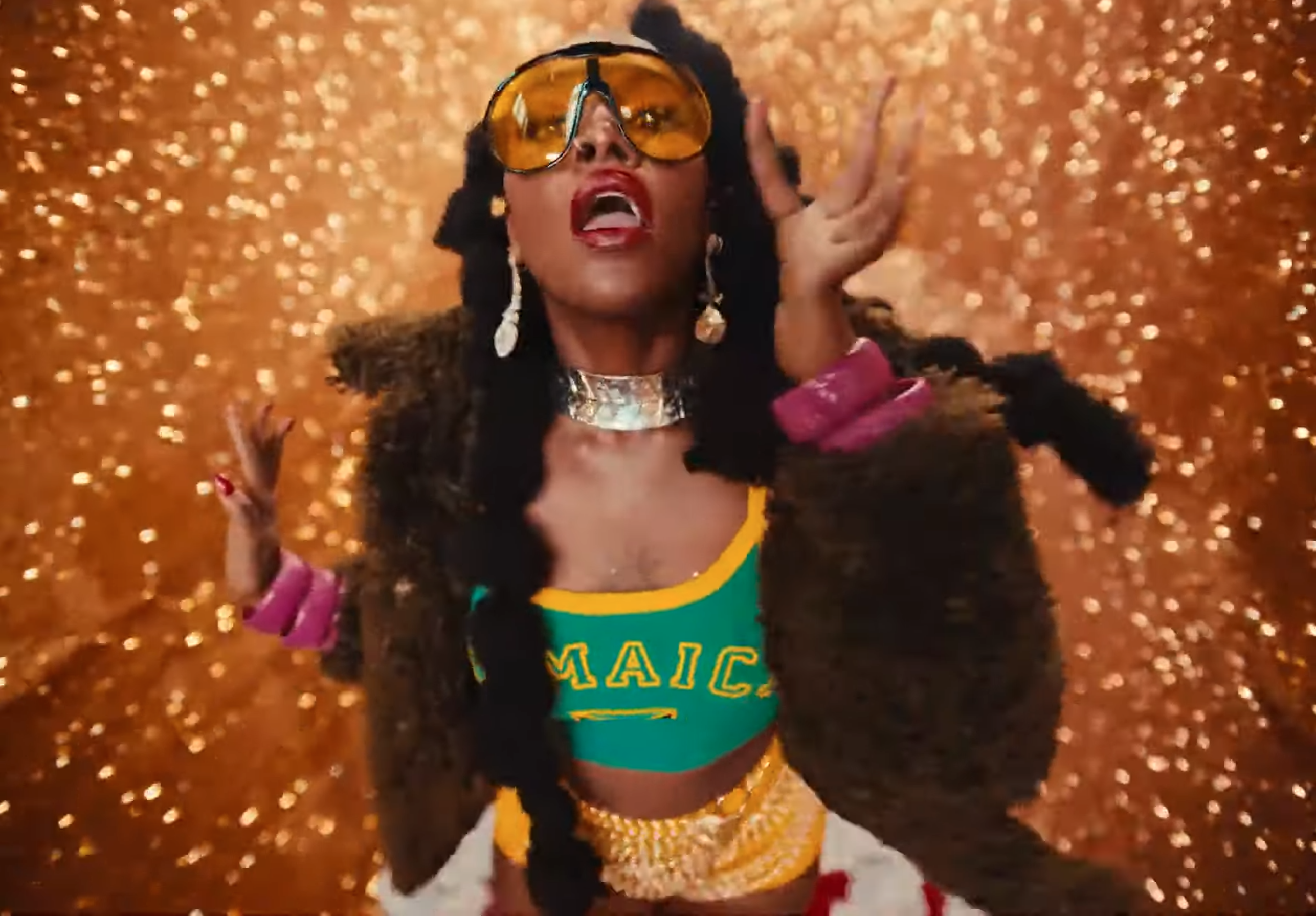
The future of advertising is no longer limited by the locations we can visit, the sets we can build, or the scenes we can physically capture. Artificial intelligence is opening a new chapter in cinematic brand storytelling.*
For decades, producing a visually spectacular television commercial demanded a significant combination of resources: elaborate locations, carefully constructed sets, specialist equipment, actors, costumes, props, and extensive production planning.
For major brands, those investments were often a necessary part of creating memorable advertising campaigns.
Smaller businesses, however, frequently faced a different reality.
They might possess a powerful story, a remarkable product, and an ambitious creative idea, yet lack the resources necessary to execute the concept on the scale they imagined.
Today, artificial intelligence, computer-generated imagery (CGI), and hybrid filmmaking are introducing new possibilities.
A product can appear inside an extraordinary digital environment. A fashion campaign can move between futuristic landscapes. A commercial can combine real actors with virtual architecture and imaginative visual effects.
These capabilities are changing the creative options available to advertising agencies, entrepreneurs, filmmakers, and corporate organisations.
We are entering an era where the ambition of a brand’s visual identity does not always have to be restricted by the physical scale of its production.**
For Nigerian businesses looking to establish stronger identities in increasingly competitive markets, this evolution deserves serious attention.
What Is AI Video Advertising?
AI video advertising involves using artificial intelligence technologies during the development, creation, enhancement, or production of advertising videos.
These technologies can support several stages of the creative process, including concept visualisation, storyboarding, background generation, image development, visual effects, animation, and selected post-production activities.
Depending on the creative brief, AI-generated footage may form part of the finished advertisement or serve only as a reference during production.
A brand might use artificial intelligence to explore several visual concepts before deciding which direction to pursue.
Another might combine professionally filmed product footage with digitally generated environments.
An advertising agency might use AI-assisted tools to experiment with alternative compositions, visual styles, and campaign treatments.
The underlying goal remains familiar: to communicate a compelling message to the right audience.
Technology simply introduces additional ways to achieve that objective.
Why AI Video Production Is Becoming Important to the Advertising Industry
The adoption of generative AI in advertising is more than an emerging creative experiment.
According to the Interactive Advertising Bureau’s 2026 Digital Video Ad Spend & Strategy Full Report, nearly two-thirds of surveyed US digital video advertising buyers reported using generative AI for video creative, an increase from approximately half in 2025.
The report also indicated that around one-third of their video advertising assets were expected to involve generative AI in 2026.
Although these findings are not specific to Nigeria, they illustrate the growing relevance of AI-assisted production in the international advertising industry.
For Nigerian brands competing for attention across social media, television, online video platforms, and digital campaigns, understanding these technologies can help inform future creative decisions.
But adopting AI should never be confused with abandoning good filmmaking.
A commercially effective advertisement still requires a clear message, a strong visual concept, an understanding of the audience, and professional execution.
The Rise of Hybrid Commercial Video Production
One of the most interesting approaches to modern advertising is hybrid filmmaking.
Hybrid video production combines live-action cinematography with digitally produced environments, CGI, AI-generated elements, and conventional visual effects.
Instead of creating an entire commercial through artificial intelligence, a production team may film the essential human performances or physical products and develop selected visual elements digitally.
This approach can be especially useful where a brand wants to maintain the authenticity of real people and products while exploring imaginative settings.
Imagine a Luxury Perfume Commercial
A Nigerian perfume brand wants a cinematic advertisement featuring its signature fragrance.
The creative concept places the product inside an extraordinary architectural environment surrounded by reflective surfaces, moving light, and dreamlike landscapes.
A traditional production might require complex location arrangements, elaborate set construction, or extensive CGI.
With a well-planned hybrid workflow, the production team could capture the actual perfume bottle under controlled lighting and integrate that footage into a digitally developed world.
The final commercial would still require skilled compositing, appropriate reflections, perspective matching, colour grading, and visual finishing.
But the brand would have an additional creative route to explore.
Imagine a Fashion Campaign
A clothing brand wants its new collection presented in a visual journey across multiple extraordinary environments.
Rather than transporting the entire production team to several locations, the filmmaker could capture the models and garments in a controlled setting while building selected environments digitally.
The challenge would be to preserve the authenticity of the clothing, including fabric texture, colour, fit, and movement.
This is especially important because AI-generated imagery can introduce inaccuracies that misrepresent real products.
Hybrid filmmaking works best when creativity and product fidelity receive equal attention.
Five Ways AI and CGI Can Transform Commercial Video Production
1. More Ambitious Creative Concepts
One of the greatest advantages of AI-assisted filmmaking is the ability to explore creative ideas that might otherwise be impractical.
Brands can consider imaginative environments, unusual camera perspectives, stylised transitions, and visual effects that expand the possibilities of conventional production.
However, sophistication should serve the campaign’s message.
A compelling commercial is not necessarily the one containing the most effects.
It is the one that communicates the brand’s identity most effectively.
2. Greater Flexibility in Production Planning
Traditional commercial filmmaking often involves considerable coordination.
Location access, weather, transport, set preparation, personnel scheduling, and physical construction can all affect production plans.
Hybrid filmmaking may allow some of these requirements to be replaced by digital alternatives.
For certain concepts, this can simplify selected stages of physical production.
But digital production also introduces requirements such as rendering, animation, compositing, visual consistency checks, and potentially significant revision work.
The most efficient production approach depends on the specific project.
3. Creative Experimentation Before Production
AI tools can help directors and advertising agencies visualise different creative treatments during pre-production.
A product might be placed within several concept environments to explore mood and composition.
A commercial director can compare lighting styles, shot arrangements, or environmental concepts before developing the final production design.
This can improve communication between the client and the creative team.
It may also help identify potential issues before significant resources are committed to filming.
4. Multiple Advertising Formats
Modern campaigns often require different versions of a commercial for different platforms.
A single campaign may need a widescreen brand film, a vertical social media advertisement, a short promotional teaser, and alternative edits tailored to various audiences.
AI-assisted production may support selected aspects of content adaptation.
Nevertheless, capturing the right footage and composing shots appropriately during production remain important.
A poorly planned horizontal shot cannot always be converted effectively into a vertical advertisement.
5. Distinctive Visual Storytelling
An outstanding commercial does more than display a product.
It creates an impression.
Colour, movement, texture, performance, music, editing, and imagery contribute to how audiences perceive a brand.
CGI and AI-assisted filmmaking can expand this visual language.
Used thoughtfully, they can help develop memorable worlds that reinforce a brand’s personality.
Used without artistic direction, they can produce imagery that feels generic or disconnected.
The filmmaker’s responsibility is to ensure the technology supports the story.
Can AI Make Commercial Video Production More Affordable in Nigeria?
One of the most common assumptions about AI video production is that it automatically reduces advertising costs.
That is not always the case.
Some AI-assisted workflows can reduce expenditure associated with selected physical sets, props, locations, or production logistics.
Other projects may require extensive digital development, specialist technical expertise, and numerous rounds of visual refinement.
A simple commercial filmed in an accessible physical location may be less expensive than generating and perfecting a sophisticated digital version.
Likewise, a complicated fantasy sequence may be more practical to develop digitally than to construct physically.
The most useful question is therefore not whether AI is cheaper than traditional filmmaking.
It is:
Which production approach will deliver the strongest result for the available budget?
A professional creative team should evaluate the concept, technical requirements, production schedule, and expected deliverables before recommending a production method.
Why Cinematography Still Matters in AI Commercial Production
Artificial intelligence can generate visually impressive imagery, but it does not eliminate the importance of cinematography.
Professional filmmakers understand how lighting shapes emotion, how lenses influence perspective, and how camera movement affects the audience’s experience.
These principles also apply to digital environments.
If a live-action subject is integrated into an AI-generated background, the lighting direction, camera perspective, depth of field, shadows, and colour characteristics must work together.
Poor integration can make the final advertisement feel artificial.
Strong integration creates a more believable visual experience.
This is why the future of professional AI advertising is likely to involve creative teams that understand both established filmmaking principles and emerging digital production techniques.
The Role of Colour Grading in Hybrid Advertising
Colour grading is an important stage in developing a consistent visual identity.
A premium fashion commercial might use restrained highlights, rich contrast, and carefully controlled colours.
A beverage campaign might benefit from a brighter, more energetic palette.
A luxury automotive advertisement may require a different approach to reflections, shadows, contrast, and colour density.
When a commercial combines physical footage with generated imagery, colour grading also contributes to visual continuity.
Elements created through different techniques must feel as though they belong to the same production.
However, grading alone cannot solve every integration problem.
Matching lighting, perspective, texture, and compositing quality should be addressed throughout the workflow.
Why Nigerian Brands Should Think Beyond Ordinary Product Videos
Nigeria is home to an active business landscape spanning fashion, entertainment, technology, hospitality, consumer products, property development, and other industries.
Many businesses compete for attention across crowded digital channels.
In this environment, a strong brand film can help communicate quality, personality, and a distinctive proposition.
A compelling advertisement can introduce a product, demonstrate its benefits, tell a meaningful story, or establish an emotional association.
The objective should not simply be to produce visually expensive-looking content.
It should be to communicate something valuable.
For a luxury fashion brand, the priority may be elegance and craftsmanship.
For a technology company, the message may centre on simplicity, reliability, or innovation.
For a hospitality brand, the goal may be to convey atmosphere and experience.
Each requires its own creative language.
AI and CGI can expand the filmmaker’s toolkit, but the concept must remain rooted in the brand’s actual identity.
Choosing the Right Video Production Company in Lagos
Businesses considering AI-assisted commercial production should evaluate potential production partners carefully.
An effective production team should be capable of understanding the brand’s objectives before proposing visual techniques.
Important considerations include the quality of previous work, experience in creative direction, understanding of cinematography, post-production capabilities, and ability to manage the project professionally.
When AI is involved, clients should also ask about commercial usage rights, product accuracy, consent for the use of identifiable people, data confidentiality, and the origin of generated assets.
A professional production company should be able to explain what is being filmed, what is being generated, and how the elements will be combined.
The strongest partnership is one in which creativity, transparency, and technical expertise work together.
Frizzle & Bizzle Films: Exploring the Next Chapter of Cinematic Advertising
At Frizzle & Bizzle Films, we believe that exceptional visual storytelling begins with a clear creative vision.
Our interests in cinematography, music video production, editing, colour grading, CGI, and hybrid filmmaking inform how we approach emerging opportunities in visual production.
As artificial intelligence introduces new techniques, our focus remains on the relationship between technology and cinematic craftsmanship.
For us, a compelling commercial is not defined solely by elaborate digital environments or sophisticated visual effects.
It is defined by how effectively its images communicate an idea.
Hybrid filmmaking allows us to explore the possibilities of combining authentic live-action material with imaginative digital production.
Whether a project involves a performance, a physical product, an extraordinary setting, or a carefully constructed visual narrative, the goal is to develop a cohesive cinematic experience.
We believe Nigerian businesses deserve advertising that reflects their ambition, identity, and creative potential.
The Future of Advertising Is Creative, Intelligent, and Human
Artificial intelligence is changing how commercial content can be developed and produced.
Its influence will continue to create opportunities and challenges for filmmakers, advertising agencies, brands, and creative entrepreneurs.
But as the technology advances, the importance of strong ideas becomes even more apparent.
When sophisticated visual tools become widely accessible, originality, storytelling, and professional execution become crucial forms of differentiation.
The brands that benefit most from emerging production techniques will not necessarily be those that adopt every new tool.
They will be those that understand how to use technology to communicate meaningful messages.
The future of video advertising is not simply about replacing physical production with artificial intelligence. It is about giving creative vision more ways to become reality.
For Nigerian brands ready to explore ambitious visual storytelling, the possibilities are expanding.
And the next remarkable commercial may begin with an idea that once seemed impossible to film.
Bring Your Brand’s Next Commercial to Life
Do you have an advertising concept that deserves a more cinematic execution?
Frizzle & Bizzle Films explores professional video production, creative direction, CGI, colour grading, and hybrid AI-assisted filmmaking.
Whether you are developing a brand campaign, product commercial, promotional video, or ambitious visual concept, we would love to discuss your creative direction.
Your brand has a story. Let’s make it cinematic.